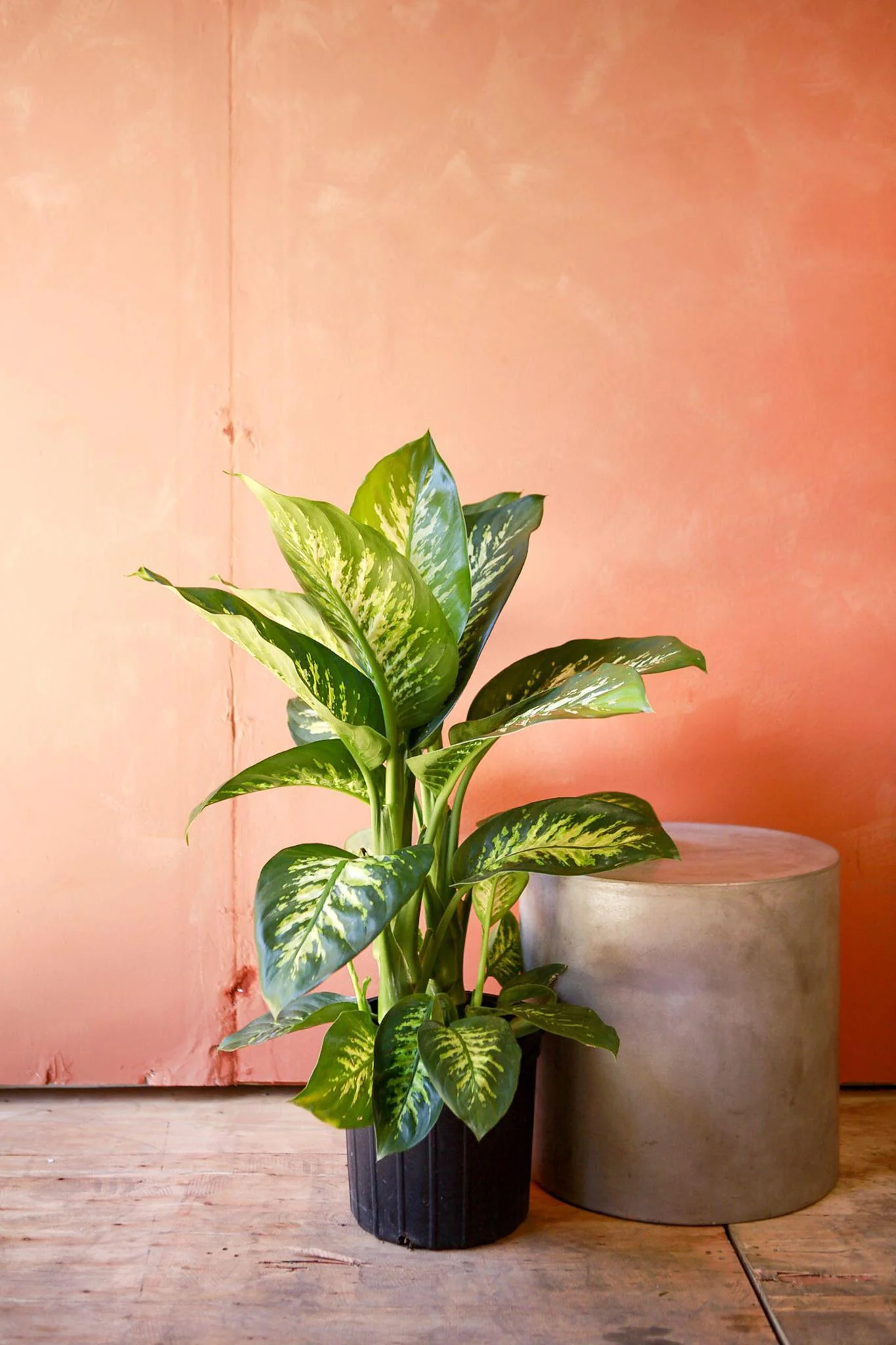
Dieffenbachia 'Tropic Snow'
Huge beautiful spotted leaves characterize this easy to care for indoor plant!
Dieffenbachia are another genus of the Arum family that has long been a part of the houseplant hobby. They are generally low light tolerant, although not as tolerant as their Aglaonema cousins with whom they’re often mistaken. Dieffenbachia are more prone to problems when they dry out too much than other Aroids, and should be kept evenly hydrated but never soggy. As they grow they will develop a cane stem that can be cut and replanted or used for propagation.
Dieffenbachia are another genus of the Arum family that has long been a part of the houseplant hobby. They are generally low light tolerant, although not as tolerant as their Aglaonema cousins with whom they’re often mistaken. Dieffenbachia are more prone to problems when they dry out too much than other Aroids, and should be kept evenly hydrated but never soggy. As they grow they will develop a cane stem that can be cut and replanted or used for propagation.
Select Variant
From $4.90
Original: $14.00
-65%Dieffenbachia 'Tropic Snow'—
$14.00
$4.90Product Information
Product Information
Shipping & Returns
Shipping & Returns
Description
Huge beautiful spotted leaves characterize this easy to care for indoor plant!
Dieffenbachia are another genus of the Arum family that has long been a part of the houseplant hobby. They are generally low light tolerant, although not as tolerant as their Aglaonema cousins with whom they’re often mistaken. Dieffenbachia are more prone to problems when they dry out too much than other Aroids, and should be kept evenly hydrated but never soggy. As they grow they will develop a cane stem that can be cut and replanted or used for propagation.
Dieffenbachia are another genus of the Arum family that has long been a part of the houseplant hobby. They are generally low light tolerant, although not as tolerant as their Aglaonema cousins with whom they’re often mistaken. Dieffenbachia are more prone to problems when they dry out too much than other Aroids, and should be kept evenly hydrated but never soggy. As they grow they will develop a cane stem that can be cut and replanted or used for propagation.